Share page


Comment & Analysis
ethics and markets
Markets need a moral compass
Iqbal Asaria argues that lightly regulated markets are harmful to social well-being and believes it is urgent that they are made to work for everyone rather than an elite
The former governor of the Bank of England, Mark Carney, took up a theme in his 2020 Reith Lectures that would have been inconceivable a decade ago: morality. Then, “free markets” were the only game in town. Carney’s opening lecture was From Moral to Market Sentiments. Essentially, the ex-Bank of England governor charted the detrimental impact of the lightly regulated markets on social well-being and on our understanding of what is moral. His analysis focuses on the need to tame markets if the multiple crises facing the world are to be managed.
Carney is not alone. Many leaders in banking, finance and economics have become much more introspective. The ex-governor of the Reserve Bank of India, Raghuram Rajan, for example, has written a book, The Third Pillar: how markets and the state leave the community behind, which argues for the inclusion of neglected stakeholders in the discourse on the role of “free markets”.
The question then arises as to how we got here. The genesis of neoliberal light regulation, with free markets at its core, goes back to Friedrich Hayek and Milton Friedman. Its practical application was conceived in the Reagan-Thatcher era in the 1980s. The argument was that a minimal state and thinly regulated markets would deliver the optimum outcome for economies and, by extension, for society.
That has obvious roots in the Cold War, but proponents of an unfettered free market argue that it goes back much further – to Enlightenment thinking. But, as Carney points out, that is based on a flawed reading of Adam Smith. Smith’s notion of the “hidden hand of the market” – delivering not only the optimum financial outcome but also the most virtuous one – was catnip to leaders such as Margaret Thatcher. It allowed them to champion the cause of economic liberalisation as the morally right thing to do.
However, as Carney and others note, Smith first mentioned “the invisible hand” in The Theory of Moral Sentiments. There he posits the primary necessity of moral actors in the market place. Few people have bothered to internalise the basic message of Smith’s requirements for moral actors. Indeed, market dominance had become so pervasive that the Harvard theologian Harvey Cox could write a vastly entertaining book, The Market as God. One reviewer – E J Dionne – said: “Harvey Cox’s ingenious sense of how market theology has developed a scripture, a liturgy, and sophisticated apologetics allows us to see old challenges in a remarkably fresh light.”
The all-dominant market was (and is) fuelled by debt on a scale not seen before. If the ‘objectivity’ of the market is seen as inherently moral, the endgame inevitably becomes the ‘privatisation of profits and socialisation of losses’. This became painfully obvious during the financial crisis when trillions of dollars of taxpayer-backed funds were deployed to save the banking sector. Hardly any banker was held to account. The disconnect between Wall Street and Main Street was complete. Ten years on from that crisis, a decade marked by austerity and persistent inequality, the Covid-19 pandemic has delivered a reality check. This is even before the climate crisis has begun to make a serious impact on our lives.
The rise of populism across the globe is a warning that the task of rebalancing morals and markets has now become urgent and cannot be avoided. The recent launch of the Inclusive Capitalism initiative spearheaded by the Vatican and Pope Francis, and endorsed by some leading companies, is indicative of the gravity of the challenge. Even the IMF sees the imperative of ‘a more nuanced view of what the neoliberal agenda is likely to be able to achieve’.
The question remains whether markets can be reformed and made to work for everyone, rather than for an elite. For this to happen, the balance between purpose and profit will need to be rethought. As Sir Michael Marmot says in his latest report on deprivation and marginalisation, we have to learn not only to build back better but also build back fairer. This is no mean task, but a renewed focus and insistence on morality in guiding the workings of markets is long overdue.
The task of rebalancing morals and markets has now become urgent and cannot be avoided
Iqbal Asaria
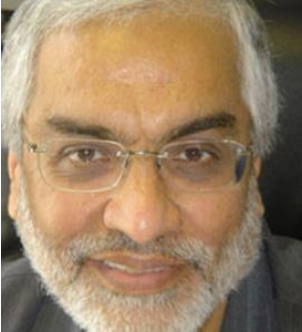
Iqbal Asaria is a Visiting Professor at The London Institute of Banking & Finance, the Bangor University CBMBA Programme, and member of the visiting faculties of Bangor Business School and City Business School. An expert in Islamic Finance, Iqbal was a Member of the Working Group established by the Governor of the Bank of England to look into issues relating to the introduction of Islamic Finance in the UK
More from
Comment & Analysis
Bert van Ark stresses the importance of productivity in any post-pandemic economic revival
Read Now
Haris Zografakis highlights initiatives the shipping industry is taking to reduce its greenhouse gas emissions
Read Now
Ruth Wandhöfer looks at how UK payments are being reshaped
Read Now